Charles F. Sing, Ph.D.

Charles F. Sing, Ph.D.

Professor of Human Genetics
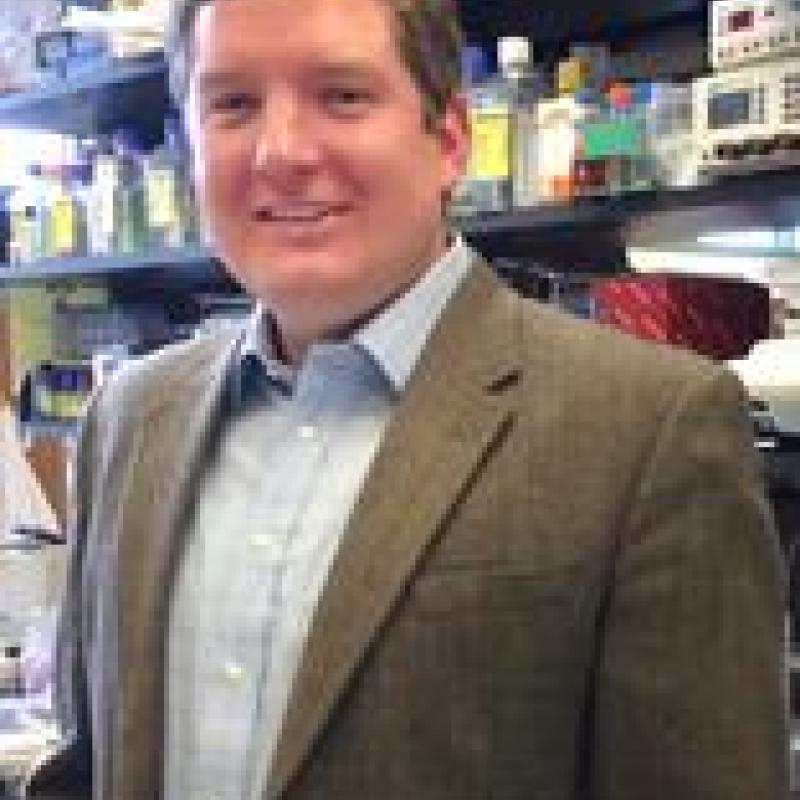
Photo by Nerissa Escalar, Mountain Sky Conference 2006

5928 Buhl
1241 E. Catherine St. SPC 5618
Ann Arbor
MI
48109-5618
Phone: 
734-764-5492
Email: 
csing@umich.edu
Research Interests: 

As the accumulation of knowledge about the agents of life has been increasing exponentially, there are clear signs about us that biologists are becoming aware that we are in great need of efforts to understand living systems more fully. Those on the cutting edge of science are realizing that it may be time to reconsider Schrödinger's question, What is life? Both reductionism and globalism (i.e., the whole is more than the sum of the parts) are being considered as leading to deeper understandings. In the 21st century integrative biology will become truly integrative as it combines the information about agents gathered by the reductionists in the last half of the 20th century with the global tendencies of complexity research to formulate laws that explain emergent properties characteristic of complex living systems.

Our research team is working to define the role of genetic variation in determining variation in health in the human population at large. Information from population-based samples is being used to address the questions that follow from the reality discussed above. In particular we are asking which variations in which genes, in which environments, influence susceptibility to human disease? Data from the genome level, through intermediate biochemical and physiological levels to the clinically defined endpoint level are available for researching this question.

Honors and Awards: 
1996 Elmer Heyne Award, Kansas State University
Education: 
1966 North Carolina State University, Ph.D. Genetics, Statistics
1963 Kansas State University, M.S. Plant Breeding, Statistics
1960 Iowa State University, B.S. Agronomy
Selected Publications: 

• Templeton AR, Clark AG, Weiss KM, Nickerson DA, Boerwinkle E, Sing CF: Recombinational and mutational hotspots within the human lipoprotein lipase gene. Am J Hum Genet. 2000; 66:69-83.

• Nelson MR, Kardia SLR, Ferrell RE, Sing CF: A combinatorial partitioning method to identify multilocus genotypic partitions that predict quantitative trait variation. Genome Res. 2001; 11:458-470.

• Stengård JH, Clark AG, Weiss KM, Kardia S, Nickerson DA, Salomaa V, Ehnholm C, Boerwinkle E, Sing CF: Contributions of 18 additional DNA sequence variations in the gene encoding apolipoprotein E to explaining variation in quantitative measures of lipid metabolism. Am J Hum Genet.
2002; 71:501-517.

• Sing CF, Stengård JH, Kardia SLR: Genes, environment, and cardiovascular disease. Arterioscler Thromb Vasc Biol. 2003; 23:1190-1196.

• Hamon SC, Stengård JH, Clark AG, Salomaa V, Boerwinkle E, Sing CF: Evidence for non-additive influence of single nucleotide polymorphisms within the apolipoprotein E gene. Ann Hum Genet. 2004; 68:521-535.

• Clark AG, Boerwinkle E, Hixson J, Sing CF: Determinants of the success of whole-genome association testing. Genome Res. 2005; 15:1463-1467.

• Rea TJ, Brown CM, Sing CF: Complex adaptive system models and the genetic analysis of plasma HDL-cholesterol concentration. Perspect Biol Med. 2006; 49:490-503.

• Stengård JH, Kardia SLR, Hamon SC, Frikke-Schmidt R, Tybjærg-Hansen A, Salomaa V, Boerwinkle E, Sing CF: Contribution of regulatory and structural variations in APOE to predicting dyslipidemia. J Lipid Res. 2006; 47:318-328.

• Dyson G, Frikke-Schmidt R, Nordestgaard BG, Tybjærg-Hansen A, Sing CF: An application of the patient rule-induction method for evaluating the contribution of the Apolipoprotein E and Lipoprotein Lipase genes to predicting ischemic heart disease. Genet Epidemiol. 2007; 31:515-527.

• Frikke-Schmidt R, Sing CF, Nordestgaard BG, Steffensen R, Tybjærg-Hansen A (2007) Subsets of SNPs define rare genotype classes that predict ischemic heart disease. Hum Genet 120:865-877

• Misra VK, Hobel CJ, Sing CF (2008) Ethnic heterogeneity in the longitudinal effects of placental vascular blood flow on birthweight. Am J Obstet Gynecol 198:72.e1-72.e8

• Dyson G, Frikke-Schmidt R, Nordestgaard BG, Tybjærg-Hansen A, Sing CF: Modifications to the Patient Rule-Induction Method that utilize non-additive combinations of genetic environmental effects to define partitions that predict ischemic heart disease. Genet Epidemiol. 2009; 33:317-324.

• Stengård JH, Dyson G, Frikke-Schmidt R, Tybjærg-Hansen A, Nordestgaard BG, Sing CF (2010) Context-dependent associations between variation in risk of Ischemic Heart Disease and variation in the 5 promoter region of the apolipoprotein E gene in Danish women. Circ Cardiovasc Genet 3:22-30

• Misra VK, Hobel CJ, Sing CF (2010) The effects of maternal weight gain on term birth weight in African-American women. J Matern Fetal Neonatal Med 23:842-849