David C. Kohrman, Ph.D.

Associate Professor, Department of Otolaryngology/HNS -
Kresge Hearing Research Institute
Associate Professor, Department of Human Genetics
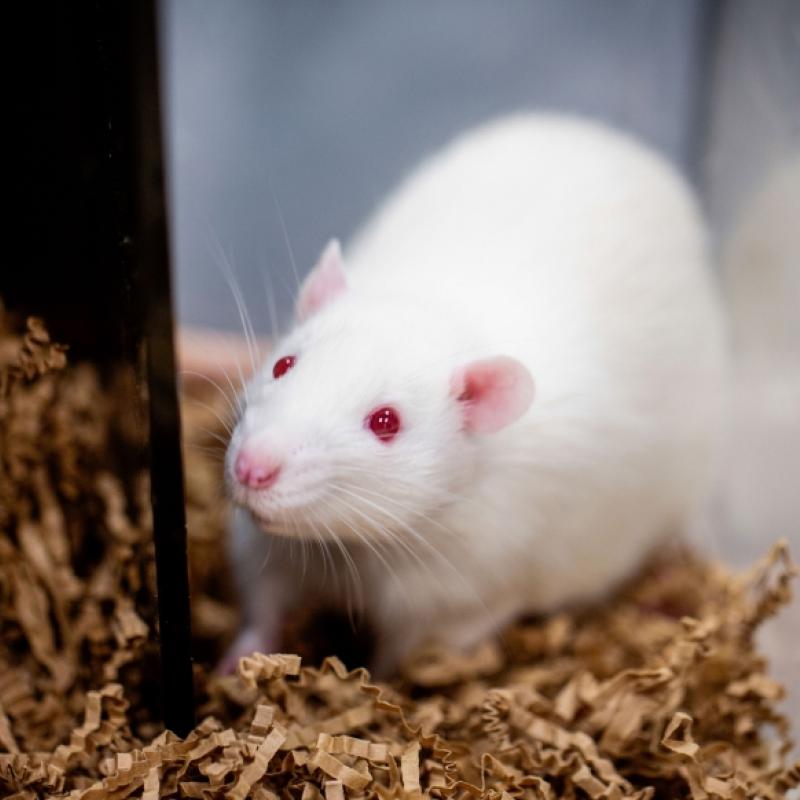
We are interested in understanding the critical molecules required for development and function of the auditory and vestibular systems, the interactions between these molecules, and the regulatory programs that control their expression. One of our primary approaches is to identify genes that, when mutated, cause inherited inner ear disorders in the laboratory mouse. The mouse provides a well-characterized genetic system and a large collection of mutants that exhibit defects in hearing and balance. Identification of the defective genes in these mutants, along with analysis of their pathophysiology, will help us to understand gene function in the normal inner ear. Unraveling the genetic basis of inner ear disorders will also provide insight into the critical mechanisms that are required for development and function of this complex sense organ.Finally, these studies will accelerate the development of clinical interventions useful for treatment of hearing loss and vestibular dysfunction in humans.
Molecular analysis of mouse deafness mutants is providing access to critical components involved in a wide range of processes in the inner ear, including development, homeostasis, and neural signaling. Using a positional cloning strategy, we have identified the genes that underlie congenital deafness and vestibular dysfunction in two mouse mutants, pirouette and spinner. Based on evidence from pathology present in the mutants, these genes are required for the normal maturation of stereocilia, the specialized actin-filled structures on the surface of inner ear sensory cells that play a key role in mechanotransduction. We are using a variety of cell, molecular and genetic approaches to analyze the function of these genes, including expression of fluorescent hybrid proteins in explant cultures of the inner ear and the development of additional, transgenic mouse models. We are also investigating other mouse strains with hearing and balance defects, and collaborating with clinical geneticists to determine the role of the human versions of these mouse genes in hereditary hearing loss. We have helped to identify several mutations in the human spinner gene (TMIE) in individuals with early onset, profound hearing loss due to defects at the DFNB6 locus. As an initial step toward clinical therapies, we are currently developing gene therapy protocols to ameliorate hearing loss in our mouse model systems.
Age-associated Changes in Cochlear Gene Expression in Normal and Shaker 2 Mice. Gong TWL, Karolyi JI, MacDonald J, Beyer L, Raphael Y, Kohrman DC, Camper SA, and Lomax MI. (accepted May 2006, J. Assoc. Res. Otolarng.)
Odeh H, Hagiwara N, Skynner M, Mitchem KL, Beyer LA, Allen N, Brilliant M, Lebart MC, Dolan DF, Raphael Y, and Kohrman DC: Characterization of two transgene insertional mutations at pirouette, a mouse deafness locus. Audiol. Neurootol. 9:303-314, 2004.
Karolyi IJ, Probst FJ, Beyer LA, Odeh H, Dootz G, Cha KB, Martin D, Avraham KB, Kohrman DC, Dolan DF, Raphael Y, Camper SA: Myo15 function is distinct from Myo6, Myo7a, and pirouette genes in development of cochlear stereocilia. Hum. Mol. Genet. 12:2797-2805, 2003.
Naz S, Giguere CM, Kohrman DC, Mitchem KL, Riazuddin S, Morell RJ, Ramesh A, Srisailpathy S, Deshmukh D, Riazuddin S, Griffith AJ, Friedman TB, Smith RJH, Wilcox ER: Mutations in a novel gene TMIE are associated with hearing loss at the DFNB6 locus. American Journal of Human Genetics 71:632-636, 2002.
Mitchem KL, Hibbard E, Beyer LA, Bosom K, Dootz GA, Dolan DF, Johnson KR, Raphael Y, Kohrman DC: Mutation of Tmie, a gene encoding a predicted integral membrane protein, results in stereocilia defects in the mouse deafness mutant spinner. Hum. Mol. Genet., 11:1887-1898, 2002.
Beyer LA, Odeh H, Probst FJ, Lambert EH, Dolan DF, Camper SA, Kohrman DC, Raphael Y: Hair cells in the inner ear of the pirouette and shaker 2 mutant mice. J. Neurocyt. 29:227-239, 2000