Sally A. Camper, Ph.D.

Sally A. Camper, Ph.D.

James V. Neel Professor and Chair
Department of Human Genetics
Professor, Department of Internal Medicine

4945 Buhl
1241 E Catherine St.
Ann Arbor
MI
48109 -5618
Phone: 
734-763-0682
Fax: 
734-763-3784
Email: 
scamper@umich.edu
Research Interests: 

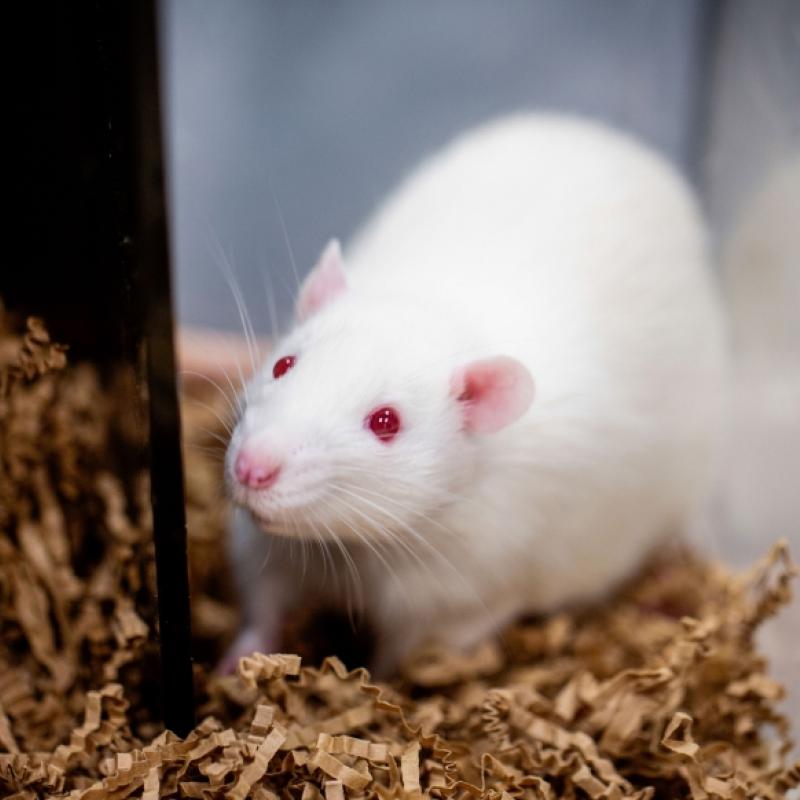
Genetics of Birth Defects: neuroendocrine, auditory, and skeletal development. We use two main approaches in our birth defects research - sequencing patient DNA to identify novel disease genes and use of cell culture and animal models, especially the mouse, to understand the mechanism and pathophysiology of disease. Genetically engineered mice that model human disease are also valuable for testing therapeutic interventions. We are particularly interested in the genetic control of differentiation and cell proliferation that pertains to stem cells, progenitors and specialized cells. We study transcriptional regulation, cell signaling, and the interaction of these.

Honors and Awards: 
2012 American Association for the Advancement of Science
2010 Rackham Distinguished Graduate Mentoring Award, University of Michigan
2007 Roy O. Greep Award for Research Excellence, Endocrine Society
2005 Distinguished Faculty Lectureship Award in Biomedical Research, University of Michigan
2002 NIH Merit Award
2000 John Boezi Memorial Alumnus Award in Biochemistry, Michigan State University
1992 National Alliance for Research on Schizophrenia and Depression, Young Investigator Award
1996 Faculty Recognition Award, University of Michigan
1995 Career Development Award, University of Michigan
1989 March of Dimes Basil O'Connor Starter Scholar Award
Education: 
1986-1988 Princeton University, Postdoctoral Fellow
1984-1986 Institute for Cancer Research, Postdoctoral Fellow
1983 Michigan State University, Ph.D.Biochemistry
1976 University of Delaware, B.S.Chemistry
Selected Publications: 

Nasonkin et al. Aged PROP1 deficient dwarf mice maintain ACTH production. PLoS One. 6(12):e28355, 2011.

Fang et al. Genetic background of Prop1(df) mutants provides remarkable protection against hypothyroidism-induced hearing impairment. J Assoc Res Otolaryngol. 13:173-84, 2012.

Castinetti et al. PITX2 AND PITX1 regulate thyrotroph function and response to hypothyroidism. Mol Endocrinol. 25:1950-60, 2011.

Fang et al. A modifier gene alleviates hypothyroidism-induced hearing impairment in Pou1f1dw dwarf mice. Genetics. 189:665-73, 2011.

Mortensen et al. Candidate genes for panhypopituitarism identified by gene expression profiling. Physiol Genomics. 43:1105-16, 2011.

Camper SA. Beta-catenin stimulates pituitary stem cells to form aggressive tumors. Proc Natl Acad Sci U S A. 108:11303-4, 2011.

Castinetti et al. Pituitary stem cell update and potential implications for treating hypopituitarism. Endocr Rev. 32:453-71, 2011

Davis et al. Birthdating studies reshape models for pituitary gland cell specification. Dev Biol. 352:215-27, 2011.