|
Morton S. And Henrieta K. Sellnor Professor of Human Genetics - Emeritus |
|
| 4909 Buhl 1241 E. Catherine St. Ann Arbor, MI 48109 -5618 |
||
Our research has two main foci, one on copper-related and copper-influenced diseases, and one on canine disease gene discovery.
Over the last two decades we have developed two anticopper drugs for the inherited disease of copper toxicity, Wilson's disease. One, zinc, for maintenance therapy, was approved by the FDA for Wilson's disease in 1997. The other, tetrathiomolybdate (TM) for initial therapy, is in the pipeline for FDA approval sometime in 2003. TM has turned out to be the world's most potent anticopper drug, and is very safe.
Because tumors require blood vessel growth (antiangiogenesis) to grow, and angiogenesis is dependent upon copper, we have tested TM as an anticopper, antiangiogenic, cancer therapy. TM has been very effective in a variety of animal tumor models and results have been encouraging in clinical trails. The mechanism of TM action is thought to be inhibition of pro-angiogenic cytokines, which we believe require near normal levels of copper for full activity. By dropping copper levels into an "antiangiogenic window," we hypothesize that we inhibit angiogenic cytokines without interfering with normal cellular requirements for copper, such as for copper-dependent enzyme activity.
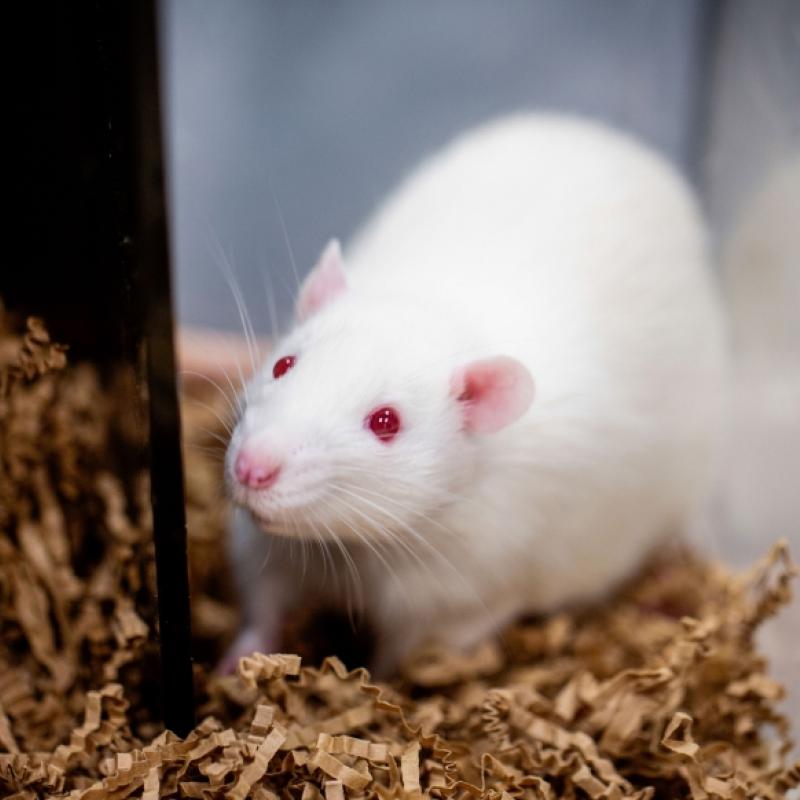
In a similar way, we have shown TM to be effective in animal models of excessive fibrosis, excessive inflammation, and in models of autoimmune diseases. TM protects against the pulmonary fibrosis from bleomycin and the cirrhosis from carbon tetrachloride in mouse models. The mechanism is believed to be copper dependence of the transforming growth factor beta (TGFb) pathway, critical for fibrosis. TM also protects against hepatitis and liver injury from acetaminophen and against heart injury from doxorubicin in mouse models. TM also protect against immune-mediated hepatitis from concanavalin A, lymphadenopathy in the lpr (systemic lupus erythematosus) mouse, collagen induced immune mediated arthritis in the mouse, and diabetes in the NOD mouse, an autoimmune model of type I diabetes. In these latter cases, the mechanism is hypothesized to be a shutting down of interleukin-2 (IL-2) transcription. Il-2 transcription is required to activate inflammatory cells which produce cytotoxic substances, such as tumor necrosis factor alpha (TNFa) and interleukin one beta (IL-1b).
We are also working on finding the causes of a number of canine genetic disorders, and on developing a map of the canine genome. Because of founder effects in purebred dogs, and because of the well-studied nature of dogs due to their companion status, they are an ideal species for gene discovery. Gene discovery in the dog can, in many cases, greatly facilitate human gene discovery.
USPHS Career Development Award, 1965-70
Distinguished Alumni Award, University of Chicago, 1976
Certification of Appreciation from the Wilson's Disease Association, 1983
American College of Nutrition Award of Distinction for Outstanding Research in Nutrition. 1989
Fellow, Morris Animal Foundation 1990
President, American College of Nutrition 1996-1997
Raulin Award, International Society for Trace Element Research in Humans 1998
President - International Society for Trace Element Research in Humans 1998-2001
Fellow, American Association for the Advancement of Science 2000
Morton S. and Henrietta K. Sellner Emeritus Professor of Human Genetics, 2000-
Honorary degree, Doctor of Science, Purdue University, 2004
Purdue University, B.S. 1952
University of Chicago, M.D. 1956
Brewer, GJ. Wilson's Disease for the Patient and Family: A Patients Guide to Wilson's disease and Frequently asked Questions about Copper, Philadelphia. 2001. Available online at
http://www2.xlibris.com/bookstore/bookdisplay.asp?bookid=12253
Brewer, GJ. Wilson's Disease: A Clinician's Guide to Recognition, Diagnosis, and Management. Kluwer Academic Publishers, Boston. 2001. Available online at:
http://www.springeronline.com/sgw/cda/frontpage/0,11855,4-40109-22-33227811-0,00.html